{{s.tag}}
{{s.count}}
{{s.who}}
{{s.text}}
{{s.quote}}
{{s.quote}}
{{s.note}}
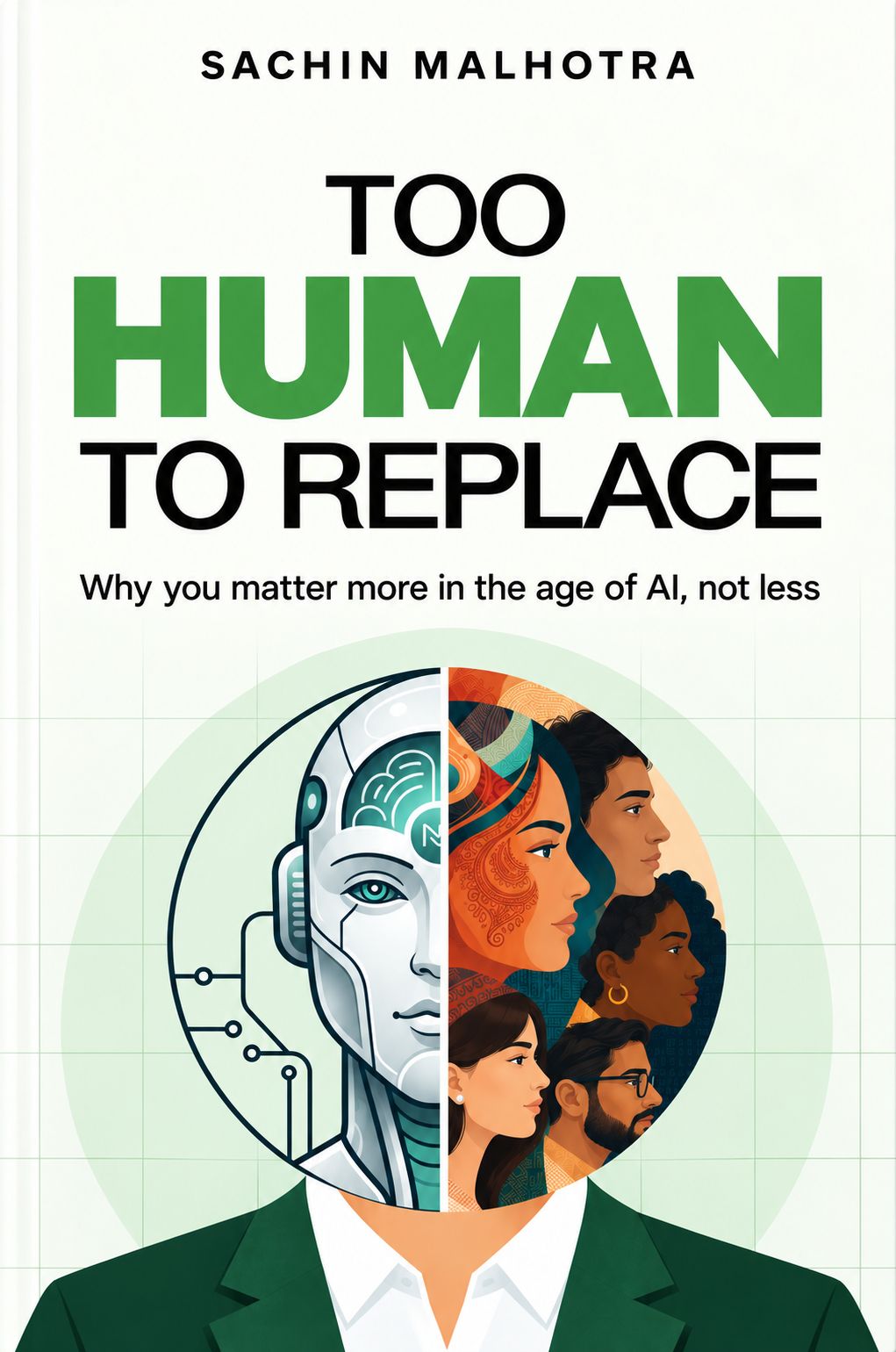
A book about the quieter story behind every AI headline: you, and why your experience and judgement matter more than ever.
HOW IT BEGAN
– Sachin Malhotra
{{s.text}}
{{s.quote}}
{{s.quote}}
{{s.note}}
FIND YOUR AI IDENTITY
It is not just about who runs fastest anymore. It is about who keeps running. And that comes down to something simpler than skill or experience: whether you are a Knower or a Grower.
THE KNOWER
Attends the session, asks the right questions, speaks with fluency. But learning has quietly become “a performance of growth rather than growth itself.”
Asks: “Am I ready for this?”
THE GROWER
Not always the most senior in the room. Just quietly, consistently one step ahead. And never only for themselves.
Asks: “What happens if I try?”
FIND YOUR AI IDENTITY
Your Adaptability Quotient has five dimensions, and they spell ADAPT. Score yourself from 1 to 5 on each. Not the level you aspire to. The level you are operating at this week, in your real work.
From Chapter 10, “Are You Ready? The Two Questions That Change Everything.”
Take it yourself, or send it to someone you think would love to know their AQ.
YOUR AQ
{{total}} / 25
{{kind}}
{{band}}
{{bandText}}
{{nudge}}
{{answered}} of 5 answered. Sit with each one honestly. Most people already know which one they are.
{{bmTitle}}
A 2 × 6 inch bookmark on A4, with cut lines.
{{shNote}}
{{d.q}}
INSIDE THE BOOK
Each chapter opens with a voice from the leaders, builders and founders shaping this era, and closes with the last word given to the one Sachin has listened to longest.
Eleven chapters.
One race.
And one that never ends.
Turn the page. The rest of the race is yours.
EARLY PRAISE
A much-needed take on AI that doesn’t make you feel left behind. Too Human to Replace takes you from AI anxiety to a practical plan for making AI work for you and staying ahead. Every professional who has wondered, ‘Will I still matter?’ should read this book.
I have spent three decades watching professionals transform, some with grace, many with fear, a few with extraordinary courage. Sachin has written the guide for the ones who are not sure which they are yet. Read it. You will find yourself somewhere in these pages. And you will leave knowing what to do next.
Every technological wave I have witnessed conferred its rewards asymmetrically; AI compresses the cycle and widens the divide. How its beneficiaries conduct themselves toward the rest will define this era. For India, the world’s knowledge-work hub for four decades, the reckoning is real and imminent. Sachin confronts it with candour and quiet optimism: the starting line remains open.
I have seen many transformation programmes fail because they reduced people to rows on a spreadsheet. Too Human to Replace is an honest, grounded guide for anyone who has quietly wondered whether their experience still counts, and a convincing case that it counts now more than ever.
THE AUTHOR

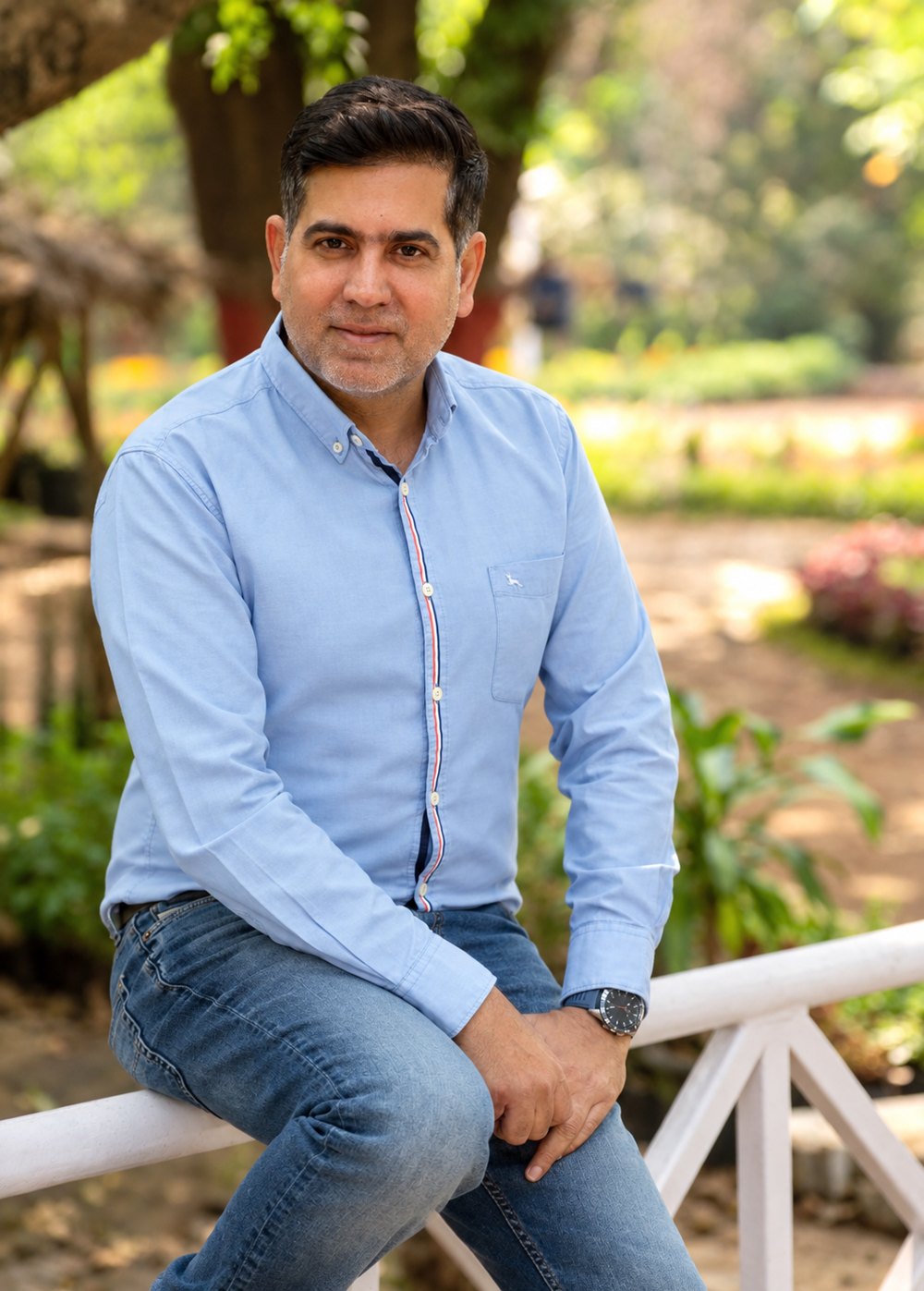
Sachin Malhotra has spent over two decades in human resources, working with people through every kind of change across India, the United States, and the Middle East. He has held senior HR and people leadership roles at L&T, Chevron, Aggreko UK PLC, and Smiths UK PLC, spanning the technology and services sectors across geographies.
Too Human to Replace grew out of what he saw up close: how many capable professionals are struggling to look at their own future with any confidence in today's world, and how often people are let go without a thought for what comes next for them, their talent written off rather than repurposed. The book is his answer to that, a case for why experience still matters and why the human in every professional is exactly what AI will need, to a great extent.
It is his first book. He writes and speaks on the future of work, the human side of the AI transition, and the belief that a professional's worth lies not in a title but in judgment, character, and the capacity to begin again. He lives in Pune with his family.
Know more at www.sachinmalhotra.comWe are not being asked to become more like the machines in order to survive them. We are being asked to become more like ourselves.
Too Human to Replace, Conclusion